

If you’ve ever looked around a women’s ministry event and felt the energy, you know just how different we all are. One woman might be quietly journaling in a corner, while another is already planning how she’ll reorganize the table setup for better flow. Another is chatting up everyone in the room, and someone else is lingering near the back, soaking it all in.
And that’s the beauty of it. We’re all wired differently—and that’s exactly why understanding personality types in women’s ministry is not just helpful but essential.
We aren’t just talking about team-building here. We’re talking about creating spaces where every woman feels seen, respected, and supported—where her God-given wiring isn’t an obstacle but a gift.
I’ve learned this through experience and through tools like True Colors™, which remain one of the most accessible and transformative frameworks for planning ministry events.
As someone trained in MBTI and DISC, I’ve seen a lot, but True Colors is the one that sticks with people long after a session ends.
Let me walk you through what I’ve learned and how you can use personality types in women’s ministry to strengthen your events, deepen your relationships, and build a thriving, Christ-centered sisterhood.
Be sure to check out my resources on teaching in women’s ministry.
It Takes All Kinds—and That’s a Good Thing
Here are three takeaways I want to offer up front:
First, recognizing personality types in women’s ministry helps avoid conflict before it starts.
When we understand what drives someone’s behavior, we’re less likely to take it personally.
Second, personality awareness gives us tools for crafting events that reach women with different motivations, emotional needs, and comfort zones.
And finally, using personality types in women’s ministry isn’t about labeling people—it’s about honoring the fullness of how God created them.
We’re not trying to change people. We’re learning to meet them where they are.
When I started using this approach in event planning, I noticed a huge shift. Women who had been quiet began to participate more because they felt more understood.
Committees worked together with less friction. The vibe changed entirely. And it wasn’t magic—it was simply understanding how personality types in women’s ministry could unlock a new level of empathy and planning.
Let’s break it down.
Why True Colors™ Works
True Colors connects personality types to four colors: Blue, Gold, Green, and Orange. I like it because it simplifies the process of understanding what makes people tick without losing depth. Each color represents a unique temperament, and when you plan with all four in mind, your events will feel inclusive, purposeful, and fun.
In my training workshops and women’s ministry planning sessions, I’ve used this method for years. Honestly, MBTI and DISC are great, but no one ever remembers their letters.
Ask someone their MBTI, and you’ll likely get a blank stare or a hesitant guess. But ask them their True Color, and they’ll tell you without hesitation.
That’s why I recommend using personality types in women’s ministry through this framework—it sticks. And anything we retain is something we can apply.
Let’s talk about each type, how they show up, and what they need from your ministry.
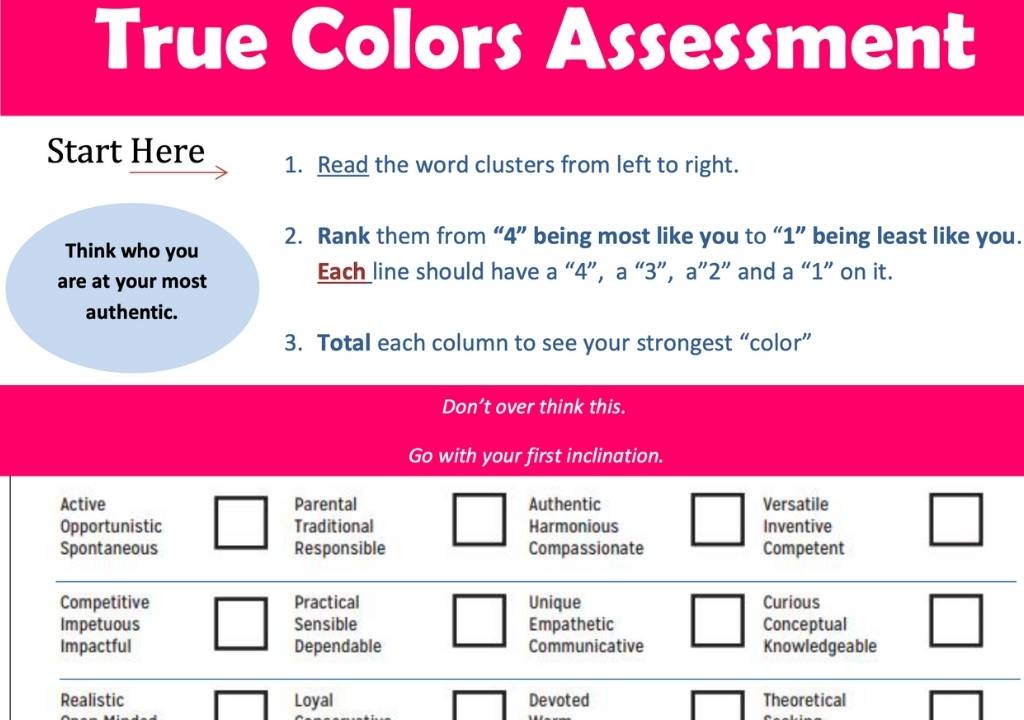
How to Plan for the Green and Gold Temperaments
When it comes to personality types in women’s ministry, few things are more misunderstood than the Green temperament. These women are deep thinkers. They love to analyze, learn, and make sense of the world in practical, logical ways. They’re often the ones who sit quietly during your event, not because they aren’t engaged, but because they’re busy processing every word.
In ministry, they need space. I mean that both literally and figuratively.
If you create events that are too fast-paced or overly emotional without clear structure, they may mentally check out. But give them a reflection space—maybe a journaling corner or time for introspection—and they will thrive. I’ve often added a “quiet moment for reflection” at the end of a session just for women like this. It doesn’t disrupt the flow—it deepens it.
If you’re referencing scripture, have handouts or digital slides ready. Greens love to research on their own, so provide links or printed resources they can explore later. You could even include verses like Proverbs 18:15 that align with their natural curiosity.
On the flip side, we have the Golds. These women are the organizers, the planners, and the ones who are silently fixing your agenda in their minds.
Personality types in women’s ministry show up clearly when the Golds walk in the room—they’re scanning for structure.
They want to know the plan and how everything fits together. Give them a clear agenda, a timeline, and a plan for follow-up, and they will be at peace.
My mom is a strong Gold, and for years I misunderstood her constant “helping” as judgment. In reality, she was showing love in the best way she knew how: by bringing order to my chaos.
Once I understood that, everything changed. And now, I welcome her support with open arms—and she feels more fulfilled.
In women’s ministry, Golds are your secret weapon for executing flawless events. They don’t just want to serve—they need to.
If you don’t give them a task or role, they may quietly feel disconnected or even critical. Assign them as table leaders or welcome coordinators.
Planning for personality types in women’s ministry means letting each woman bring her God-given strengths into the room.
By making room for these differences, we’re not just creating better events—we’re creating a more loving, intentional, and Spirit-led ministry.
Understanding the Blue and Orange Temperaments
Now let’s talk about the heart and the fire of the group. When you’re working with personality types in women’s ministry, you’ll quickly spot the Blue temperament. These are the women who make everyone feel seen, heard, and deeply valued.
They are the quiet comforters, the enthusiastic greeters, and the empathetic listeners who seem to just know when someone’s not okay.
Blues value connection over everything.
They are relational, intuitive, and emotionally intelligent. If something feels “off” in a room, a Blue will sense it before anyone else. I believe many women’s ministry leaders are primarily Blue.
They’re driven by compassion, and they’re usually the ones who say “yes” before even thinking of the personal cost.
If your event doesn’t include space for real connection, your Blues might leave unfulfilled. They’re not just coming for the message—they’re coming for the moment. They want to talk, to pray, to cry, to laugh, and to love on other women in authentic ways.
When planning for personality types in women’s ministry, you must create opportunities for personal sharing, group interaction, and encouragement.
Now, meet the Oranges – the people, not the fruit.
You’ll know them as soon as they walk in the room—bold, expressive, and likely running a few minutes late because they were working on something fun or adventurous.
Oranges are the doers.
They crave action, movement, and something unexpected. In women’s ministry, they’re often the creative spark. They’ll decorate a room in under an hour, come up with a skit on the spot, or suggest a spontaneous activity that gets everyone laughing.
While structure soothes a Gold and solitude feeds a Green, spontaneity fuels the Orange.
That’s why planning for personality types in women’s ministry requires a balance—too much routine bores the Oranges.
Give them something active to do, whether it’s a game, a challenge, or a hands-on project. If you keep them engaged, they’ll bring vibrant energy to your event.
If not, you might notice them withdrawing or mentally checking out.
Think about it this way: the Blues will nurture your group emotionally, the Oranges will energize it, the
Greens will make sense of it, and the Golds will keep it all running smoothly. When you plan with all of that in mind, your women’s ministry becomes a true reflection of the Body of Christ—many parts, one purpose.

Reflecting on Your Leadership and Personality
Before you can effectively manage personality types in women’s ministry, you need to take an honest look at your own temperament.
I’ve said this before, but it’s worth repeating: self-awareness is everything. If you don’t understand your own wiring, you’ll naturally lean toward creating events and programs that suit your personality, often without realizing you’re leaving other types out.
When I first started planning events, I didn’t account for the fact that not every woman enjoys deep conversation or structured workshops.
Some just wanted to laugh, create, and feel free. Recognizing that helped me grow as a leader and build events that welcomed everyone.
Think about what energizes you and what drains you.
Are you a structured Gold, always ready to make a checklist?
Are you a free-spirited Orange who thrives in spontaneity?
Or maybe you’re a reflective Green or a heart-centered Blue.
The more you understand yourself, the better you’ll balance personality types in women’s ministry when planning activities, delegating roles, and setting the tone for your team.
It’s also wise to ask for feedback from your committee or volunteers.
They’ll notice patterns you might miss.
Sometimes our strengths blind us to our weaknesses. For example, as someone who leans toward the Blue temperament, I used to pack every event with emotional storytelling and sharing sessions.
It wasn’t until a Green friend told me, “I need time to think, not just talk,” that I realized I had overlooked her needs.
Learning how to lead with compassion and awareness is a lifelong process.
But when you intentionally plan with personality types in women’s ministry as your guide, you’ll create experiences that reach everyone.
This means you capture the interest of women who want to reflect, women who want to serve, women who want to connect, and women who want action.

Bringing It All Together
When we take time to consider the different ways women think, feel, and engage, we create ministry spaces that are not just welcoming but life-giving.
Your women’s group isn’t made up of clones—it’s a beautifully diverse collection of personalities, perspectives, and strengths. That’s what makes ministry leadership both a challenge and a joy.
As you prepare your next event or gather your team, pause and ask yourself: Who have I been planning for? Am I only thinking through my lens, or am I building experiences that meet the emotional, mental, and relational needs of others too?
It’s not about changing who you are—it’s about learning how to lead with greater insight, empathy, and strategy. That’s when transformation happens—not just in events, but in lives.
So here’s something to ponder as you move forward:
What’s one small way you can stretch yourself to include more personalities in your next gathering?
Try writing out your answers to these questions:
- What aspects of leadership come most naturally to me—and which ones take more intention?
- Have I ever misunderstood someone simply because they expressed themselves differently than I would?
- What adjustments can I make to serve others in ways that feel authentic and effective for them?
Your intentionality will speak volumes.
And the women you serve will feel it—maybe not in words, but in how safe, seen, and celebrated they feel in your presence.


Leave a Reply
You must be logged in to post a comment.