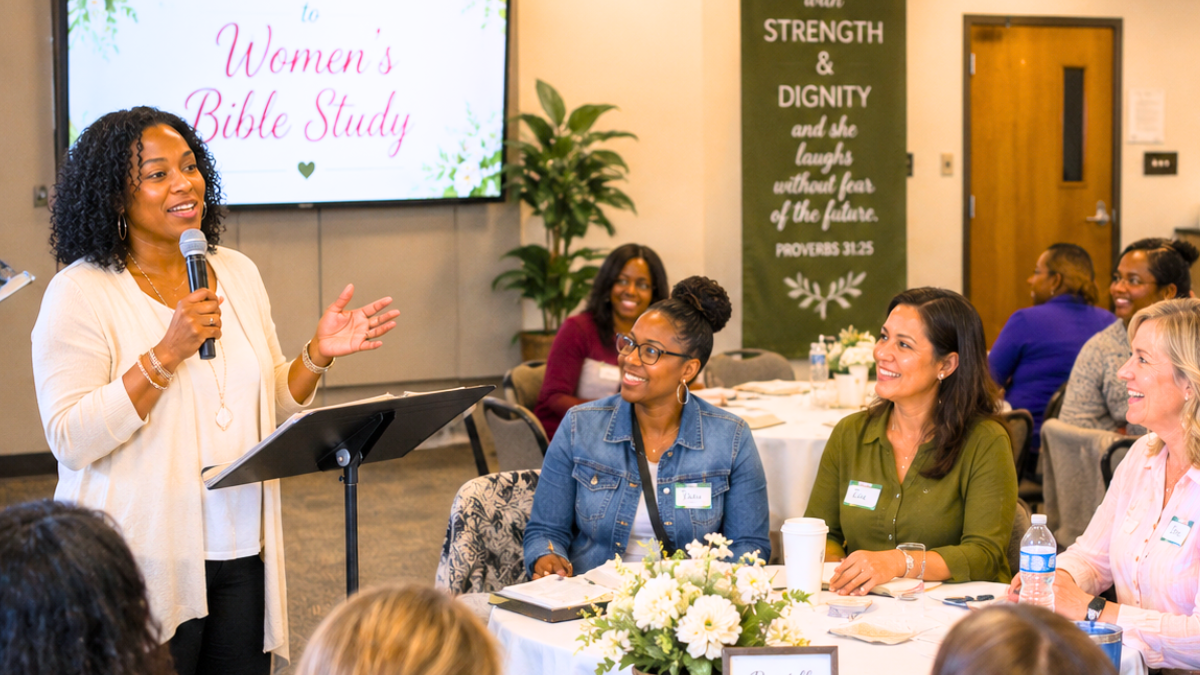
In faith communities like ours, Christian mentoring for women serves as a bridge between intellectual belief and lived faith. It’s the difference between knowing about the Christian life and seeing it in action. In my experience as a pastor’s wife, I think it turns abstract theological doctrine into active, relational discipleship.
I found information from an educational scholar named Sharon Daloz Parks. She defines spiritual mentorship as an intentional, mutually demanding relationship. In her view, it can cultivate moral and faith development within a supportive community of women.
From a psychosocial perspective, the research I found demonstrates that structured intergenerational (folks of different ages). These types of mentoring programs offer the kind of guidance that builds personal resilience. I know that when I see what my mentor went through or learned from an experience, it helps me.
Furthermore, studies in faith formation show that women in intentional, Christian mentoring are more likely to thrive.
It also suggests that Christian mentoring for women keeps women actively engaged in the community. In our case, the “community” is my women’s ministry – or yours. The best part of Christian mentoring for women is that it helps the ladies successfully navigate complex life transitions.
Where to Start with Planning a Christian Mentoring Program
Start with a Structure Vision
Mentoring is not just one woman to one mentee.
I used to limit Christian mentoring for women to that sort of dynamic.
It wasn’t until I married my husband years ago that I saw that a mentoring dynamic can be two people to one mentor. It just needs to be organized well.
A one-to-three model – one mentor walking with three mentees – is a great middle ground between one-on-one mentoring and a full small group. Here’s how that dynamic tends to work and what makes it thrive.
Why It Works
A single mentor pouring into three women at once multiplies her reach without diluting the relationship too much. It also gives mentees something one-on-one mentoring can’t: peer companionship.
The women aren’t just learning from the mentor — they’re learning from watching each other process, ask questions, and grow. It normalizes struggle (“she’s dealing with that too”) and builds a small community rather than just a pair.
How the dynamic typically plays out
- The mentor sets the tone, not the agenda. With three women in the room, the mentor shifts from “answering one person’s questions” to “facilitating a shared conversation” — drawing quieter mentees out, gently redirecting a mentee who dominates, and making sure Scripture and prayer stay central rather than the conversation drifting into pure life-advice.
- Peer bonds often outlast the formal program. It’s common for the three mentees to become a standing support system for each other long after the mentoring season ends — texting, praying for one another, meeting up without the mentor.
- Depth trades off against personal disclosure. Some things a woman would only say one-on-one she may hold back in a group of four. Good facilitators build enough trust that this gap narrows over time, and offer a standing invitation for a mentee to reach out one-on-one between group meetings if something heavier comes up.
- Consistency matters more than in 1:1. If one mentee misses a few sessions, the rhythm of the group is more fragile than a pair — so attendance and communication norms need to be set early.
Practical shape for a 1:3 group
- Frequency: Biweekly or monthly works better than weekly for most schedules across four women.
- Format: A simple rhythm — check-in, a short passage or theme, open discussion, prayer for each other — keeps every session focused without feeling like a class.
- Mentor’s role: Less “answer-giver,” more “wise elder in the room” — modeling how to process life through faith, and letting mentees minister to each other under her guidance.
- Group size ceiling: Three is often cited as the sweet spot — enough for peer dynamic and resilience if one woman drops off, but still small enough that everyone gets real air time and the mentor can track each woman’s growth individually.
- 1:1 touchpoints: Many mentors build in an occasional individual coffee or call with each mentee, so the group dynamic doesn’t crowd out personal attention entirely.
Start with a Clear Purpose
Before you recruit a single mentor, get specific about what the program is meant to accomplish.
“Helping women grow spiritually” is a good starting point, but it’s too broad to build a program around. Ask your leadership team:
- Is this discipleship (helping believers mature), evangelism (walking new believers toward faith), or both?
- Are you focused on a particular life stage — new believers, young moms, women navigating a transition — or open to all?
- What does a “successful” mentoring relationship look like after six months or a year?
Define What a “Spiritually Mature” Mentor Looks Like
This is the piece programs most often leave vague, and vagueness here causes real problems later.
Spiritual maturity isn’t about age or how long someone has attended church … it’s about fruit.
For Christian mentoring for women, consider criteria like:
- A consistent walk with Christ evidenced by prayer, Scripture engagement, and character over time
- Emotional health — mentors who’ve done their own inner work and aren’t using the relationship to meet their own unmet needs
- A track record of discretion and confidentiality
- Willingness to be mentored and held accountable themselves
- Basic listening skills and humility — mentoring is not lecturing
Many churches ask potential mentors to fill out an application.
I think this is a good idea. It adds a formality that encourages folks to take your Christian mentoring for women seriously.
Schedule a time for them to sit for a short interview with a pastor or ministry leader, and provide a reference.
This isn’t bureaucracy for its own sake; it protects the women being mentored and preserves trust in the program.
You can discern so much from talking to a person about their views on specific topics.
Build a Thoughtful Match Process
Pairing women well is part art, part process.
Take the time to Gather information from both mentors and mentees.
Consider the season of life, personality, specific needs or goals, availability, and even personality assessments if your team uses them. I’ve written about personalities in this post. I’m a True Colors-certified facilitator. Contact me if you’d like to have a live virtual session.
It’s also wise to set expectations up front that a first match isn’t always the right one. Sometimes folks simply don’t connect. I’d allow the freedom for either woman can request a change without guilt or awkwardness in your Christian mentoring for women.
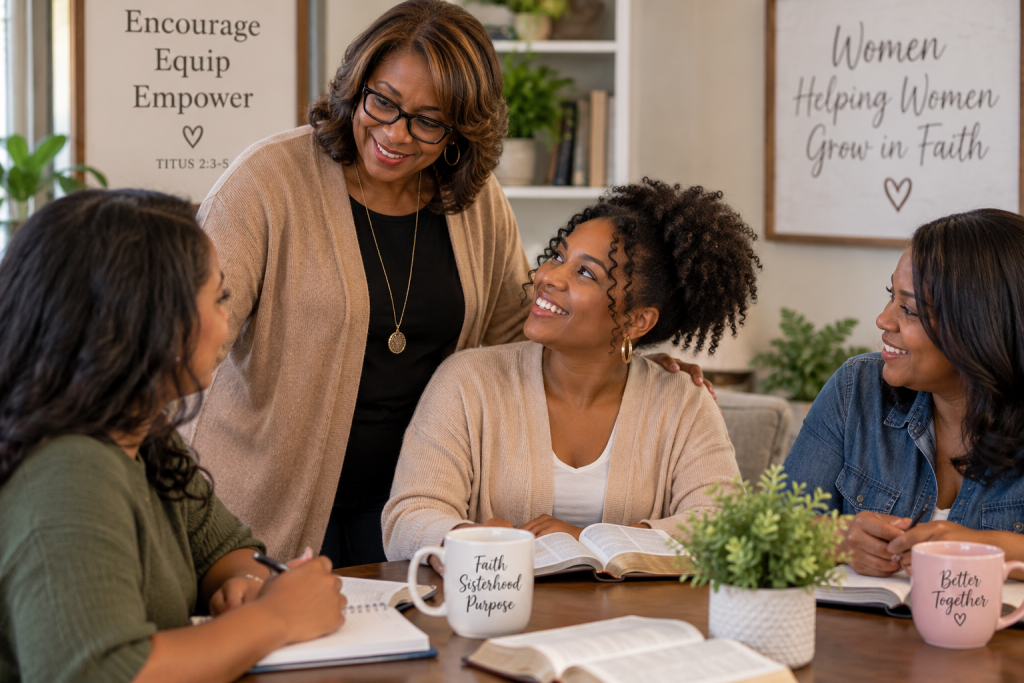
Give Every Pair (or small group) a Simple Framework to Follow
In my nonprofit experience, I’ve learned mentoring relationships flourish with light structure, not heavy rules.
Consider providing:
- A suggested meeting cadence (weekly or biweekly is common)
- A simple relational covenant both women sign — confidentiality, honesty, commitment length
- Optional conversation guides or a shared reading plan for pairs who want a starting point
- A defined season length (many programs run 6–12 months, then allow renewal)
The goal is enough scaffolding that mentors aren’t left wondering what to do, without so much curriculum that the relationship feels like homework.
Train and Support Mentors Continuously
Even spiritually mature women benefit from training on how to mentor well.
A short onboarding session covering active listening, healthy boundaries, and what to do if a mentee discloses something serious (abuse, self-harm, crisis) is an important support method.
They also need to know how to point someone toward pastoral or professional help when a need goes beyond mentoring is essential.
Beyond onboarding, build in ongoing support – a quarterly gathering for mentors to share what’s working, pray for their mentees, and ask questions.
Mentors who feel supported are more likely to stay in the role longer and mentor better. That’s been my experience.
Create Simple Accountability and Feedback Loops
Check in with pairs at set intervals .
I like sending a short survey every three months, or a personal call to see how everything is going.
You don’t want mentors out there flailing throughout the process. Consider checking in at the two-month mark right after the launch. Then, I like every three months. But you can also opt for every six-months – whatever works best for you.
Ask what’s going well, what’s hard, and whether they want to continue.
This lets you catch mismatched pairs early, celebrate what’s working, and gather stories that will help you recruit future mentors.
Scripture References of Christian Mentoring for Women
Dont you think scripture itself establishes relational guidance as a cornerstone of spiritual maturity?
Plus, it can show the power of Christian mentoring for women (even though some of my examples are men) through trusted, lived examples:
- Naomi and Ruth (Ruth 1–4): Demonstrates how a mentor’s spiritual guidance through profound grief, cultural transition, and uncertainty can anchor a younger woman’s faith and align her path with God’s redemptive plan.
- Paul’s Charge in Titus 2:3–5: Explicitly outlines the blueprint for Christian mentoring for women, calling older, mature believers to walk alongside younger women to model godly character, self-control, and practical wisdom in everyday living.
- Paul and Timothy (1 Timothy 1:2): Highlights how intergenerational spiritual encouragement—analogous to modern mentoring partnerships—provides essential accountability and spiritual protection to equip the next generation for resilient faith.

Let Me Help You Promote It – A Sample Idea
To help you market your event effectively, use a marketing platform like the one below. Feel free to customize.
Have you ever wished for someone a few steps ahead of you in life and faith?
You know someone to pray with, bounce ideas off of, or simply remind you of God’s promises when life gets overwhelming?
Or perhaps you’ve been walking with Jesus for years and feel a gentle nudge from the Holy Spirit to invest in the next generation of women. Are you open to sharing the wisdom, Grace, and lessons you’ve gathered along the way?
Whether you’re seeking guidance, eager to share your story, or simply longing for deeper, authentic community with other sisters in Christ, you belong here.
We are so excited to invite you to [Event Name]: A Women’s Mentoring Gathering, taking place on [Date] at [Time]in [Location/Building Name].
Why Christian Mentoring for Women?
The Apostle Paul wrote in Titus 2 about the beauty of women encouraging, teaching, and walking alongside one another in faith.
Do you remember that scripture?
Titus 2:3-5 (New International Version)
3 Likewise, teach the older women to be reverent in the way they live, not to be slanderers or addicted to much wine, but to teach what is good. 4 Then they can urge the younger women to love their husbands and children, 5 to be self-controlled and pure, to be busy at home, to be kind, and to be subject to their husbands, so that no one will malign the word of God.
In a world that often leaves us feeling isolated or overwhelmed, biblical mentorship offers a safe place to:
- Grow Spiritually: Go deep into God’s Word with someone who can encourage your daily walk.
- Find Authentic Community: Build meaningful relationships that extend beyond Sunday morning small talk.
- Navigate Life Transitions: Gain insight and perspective on relationships, career, mothering, faith, and trials.
- Be Known and Loved: Experience the warmth of a community that prays for you and roots for you.
What to Expect at the Event
[Event Name] isn’t a high-pressure setup; it’s an inviting, casual, and uplifting gathering designed to help us connect! Here’s a quick peak at what we have planned:
- Coffee & Refreshments: Enjoy delicious treats and warm drinks as you settle in.
- Short Devotional: Hear an inspiring message from [Speaker Name/Our Ministry Team] on the power and impact of Christ-centered relationships.
- Panel Discussion & Stories: Real, transparent testimony from women who have experienced the gift of mentoring firsthand.
- Interactive Connection Time: An easy, fun opportunity to chat with women across different ages, backgrounds, and life stages to help match potential mentors and mentees!
Who Is This Event For?
- Potential Mentees: Women of all ages seeking encouragement, spiritual growth, and connection.
- Potential Mentors: Women who have a heart to listen, pray, and walk alongside another sister in faith.
- The Curious: Anyone who wants to learn more about what mentorship looks like before committing to a partnership!
Event Details & Registration
- Date: [Insert Date]
- Time: [Insert Start Time] – [Insert End Time]
- Location: [Insert Address/Room Number]
- Cost: [Free / $X including breakfast/snack]
- Childcare: [Childcare is provided with registration / Childcare details]
Ready to step into community?
Spaces are limited so we can keep our table discussions cozy! Please RSVP by [Deadline Date] so we can prepare enough food and materials for everyone.
[Click Here to Register Now] (Link to your registration page)
“Therefore encourage one another and build each other up, just as in fact you are doing.” — 1 Thessalonians 5:11
We can’t wait to see how God moves through our time together. Grab a friend, bring an open heart, and join us!
Get the ENTIRE Program
A Mentorship Program You Can USE!
Get your guide, templates, and measurement tools – all in one resource!

I hope this helps you as you plan your women’s ministry mentoring program.
I’ve developed an amazing program for mentoring in women’s ministry settings. You must check it out! It includes templates, guidance, and directions. View it here!
In the meantime, check out this free Christian mentoring for women. Feel free to download and use it as a guide.